An MRI shows what your brain looks like. A qEEG shows what it’s doing.
For the parent, the exhausted adult, and the high performer who have been asking the same questions for years and getting the same answers. A brain map is the first time most people get a real one.
“I never considered — or had any knowledge — that my brain follows a set pattern with limited variability. I assumed it was always in flux, recalibrating continually. It isn’t. Seeing it on a map was the first time anyone had answered the question I’d been asking for years.”
— NeuroNook Client
What is qEEG brain mapping?
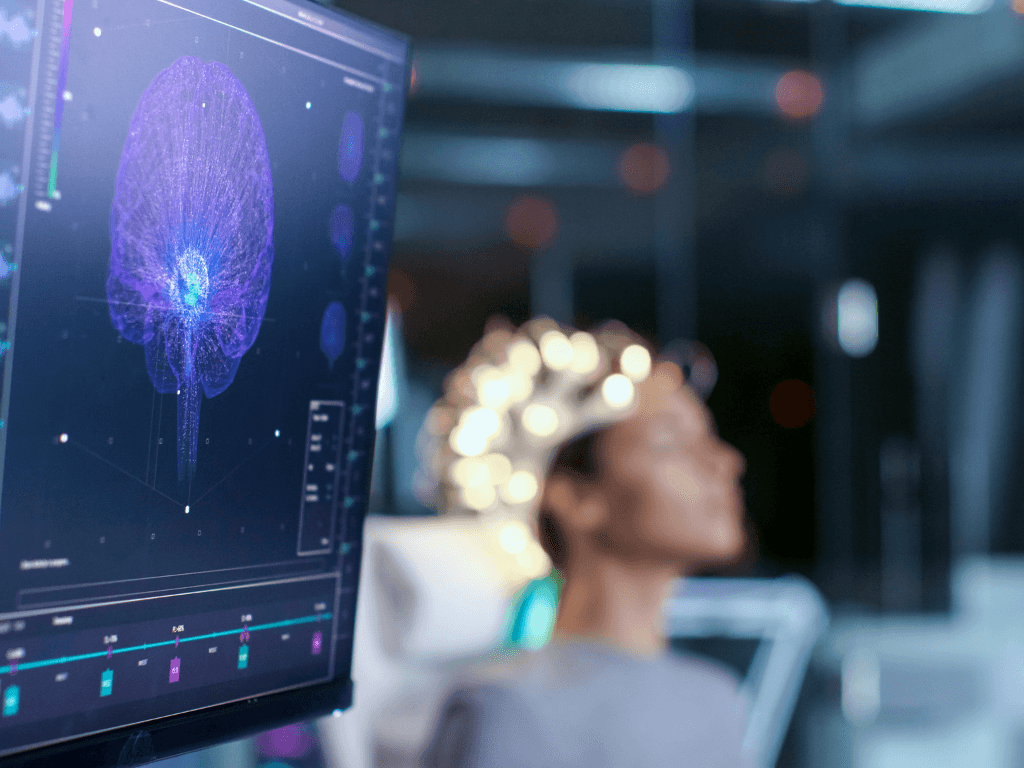
qEEG brain mapping is a non-invasive, painless recording of your brain’s electrical activity across 19 regions. We place a comfortable sensor cap on the scalp, record your brainwaves for about 10 minutes, and compare your patterns to a large database of neurotypical brains. The result is a clear, data-driven picture of how your brain is actually functioning — where activity is higher or lower than expected, and which patterns line up with the things you’ve been struggling with.
An MRI shows what your brain looks like. A qEEG shows what your brain is doing. That distinction matters because structure alone can’t explain why a bright teenager can’t finish a paragraph, why an executive hits a wall at 2pm, or why a healthy person wakes up at 3am and can’t get back to sleep. Function can.
A brain map is the first step toward answers that guessing and symptom checklists can’t give you.
What a brain map reveals
Your map captures patterns that correlate with how you think, feel, and perform every day.
Attention & focus
Brainwave patterns associated with ADHD, distractibility, and difficulty sustaining focus under demand.
Anxiety & worry
High-beta activity and regulation patterns linked to persistent anxiety, rumination, and overthinking.
Sleep regulation
Patterns in the brain's wake/sleep balance that may be disrupting your ability to fall or stay asleep.
Emotional reactivity
Right/left hemisphere balance and regulation patterns connected to mood, irritability, and emotional control.
Cognitive efficiency
How well different brain regions are communicating with each other and working together under load.
Performance ceilings
Patterns that may be limiting how efficiently your brain performs at its best for work, school, or sport.
Who brain mapping is for
Brain mapping is for anyone who wants objective information about how their brain is actually working, rather than guessing from symptoms alone. Common reasons people come to NeuroNook for a brain map:
- Challenges with attention and focus, including ADHD
- Persistent anxiety, worry, or racing thoughts
- Sleep difficulties — falling asleep, staying asleep, or waking up tired
- Emotional reactivity or difficulty with regulation
- The aftermath of concussion or head injury
- Interest in neurofeedback training and wanting to know what to target
- Performance optimization for founders, professionals, and high performers
We map teens, young adults, and adults. For children, we typically perform a brain map as part of a neurofeedback treatment plan rather than as a standalone assessment.
What happens during your session
Brief intake
The brief intake includes assessments you complete on your own, along with a short conversation to understand your goals, current concerns, and any relevant history. This helps us interpret your map in context.
The recording
We place a sensor cap on your scalp and record your brainwaves for about 10 minutes. You'll sit comfortably with your eyes open, then closed. It's painless and non-invasive.
Quantitative analysis
We process your data and compare it to a normative database, generating a detailed brain map report that shows how your brain is functioning across regions and frequencies.
Data-review session
You return for a 60-minute session where we walk through the findings in plain language. No jargon. You'll leave with a clear understanding of what your brain is doing and what your options are from there.
What’s included
One price, listed up front. Most brain mapping clinics in the Charlotte area make you call or book a consult to find out what it costs. We'd rather you know before you pick up the phone.
Comprehensive qEEG brain map
- ✓About 10 minute brain mapping session
- ✓Quantitative analysis compared to normative database
- ✓Written brain map report
- ✓60-minute data-review session in plain language
- ✓No obligation to do neurofeedback afterward
Brain mapping questions
See how your brain is actually working.
A brain map is the clearest, most objective first step toward answers. Book a session and we’ll take it from there.