Brain mapping & neurofeedback in Charlotte, NC. Care built on what your brain is actually doing.
NeuroNook is The Loft’s brain mapping and neurofeedback clinic in Charlotte. We start with a qEEG brain map — an objective picture of how your brain is working — then train it where it needs the most support. For focus, anxiety, sleep, trauma, concussion recovery, cognitive performance, and peak performance.
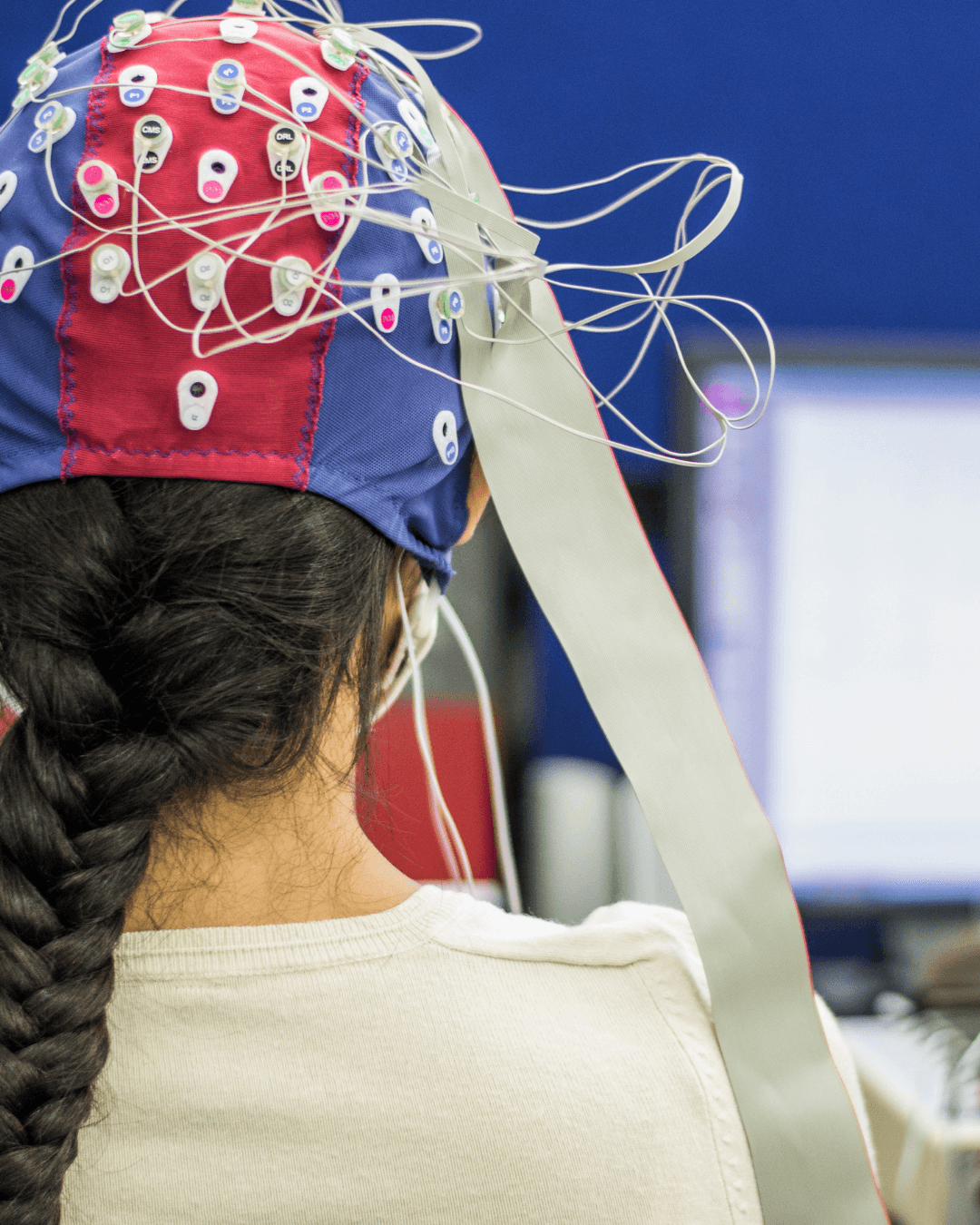
Starts With Data
Every client begins with a qEEG brain map
Licensed Oversight
Overseen by a licensed counselor & ISNR member
Serving Charlotte
Ballantyne, Waxhaw, South Charlotte, Matthews
The moment the pattern becomes visible.
Most of our clients come to us after a long list of things that didn’t work. Not because those things were wrong — but because nobody was looking at the one thing that explains the rest. Here’s what they tell us after their brain map:
“Overall she is letting things roll off her back a lot more. Her perspective on the size and severity of any given problem has greatly improved.”
— Parent
“This process is helping her to use the tools she is developing in therapy a lot more effectively and efficiently.”
— Kim M., Marvin
What is brain mapping?
Brain mapping — also called qEEG — is a non-invasive, painless recording of your brain’s electrical activity. We place a comfortable cap with sensors on the scalp, record your brainwaves for about 10 minutes, and compare your patterns to a large database of neurotypical brains.
What comes back is a thorough, individualized report — a clear picture of how your brain is actually working: where activity is higher or lower than expected, how well different regions are communicating, and which patterns line up with the symptoms you’ve been living with.
An MRI shows what your brain looks like. A qEEG shows what it’s doing. That’s the difference.
$450 · includes report & review session

Looking into something specific?
We've built dedicated pages for the conditions we work with most. Each one goes deeper on what the research shows, what we've seen work, and what to expect.
Conditions and patterns we address.
Every client at NeuroNook starts with a brain map. What we find determines the plan — not the other way around.
From uncertainty to a plan.
Every plan combines two services: qEEG brain mapping to see what your brain is doing, then neurofeedback training to change it.
Brain map ($450)
Non-invasive, ~10-minute recording plus a thorough, individualized report and review session. You walk away with a clear understanding of what's actually happening. Many clients find ways to improve their day-to-day just from identifying the patterns.
Personalized plan
We build a training protocol based on your map, not a template. We tell you how many sessions we think it will take and what progress will look like.
Neurofeedback training ($130/session, or $120 with a bundle of 10)
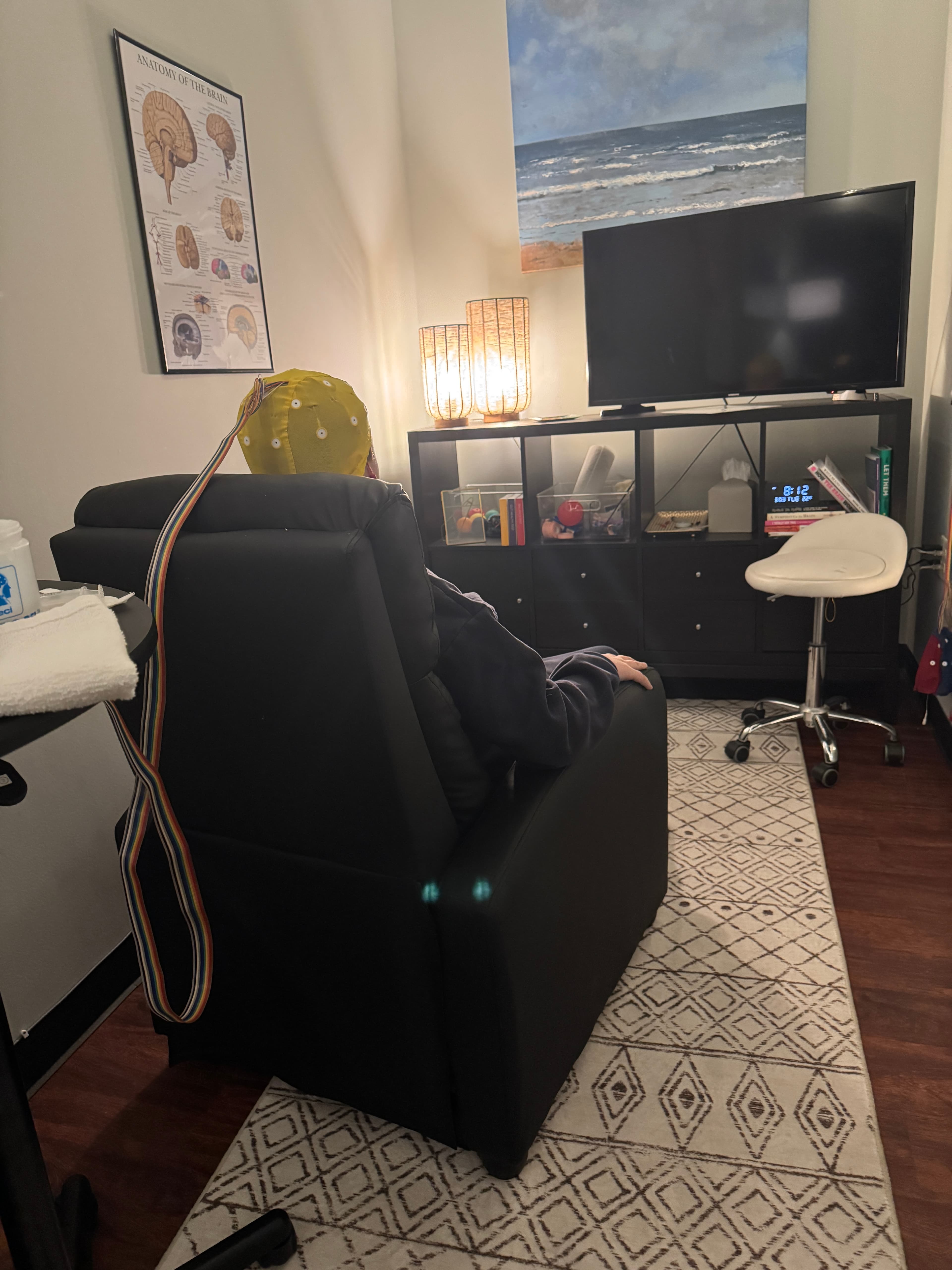
Sessions are $130, or $120 when you buy a bundle of 10. 1–2 sessions per week, 25–30 minutes each. Clients watch a TV program from a curated watchlist, sit back, relax, and let their brain do the work.
Objective progress tracking
We remap the brain at intervals so you can see the patterns shifting — not just feel better without knowing why.
If any of this sounds familiar, it’s for you.
The parent whose child has had three school calls this month and whose patience is running out.
The adult who has been in therapy for years and still feels stuck in the same pattern.
The teen or young adult whose ADHD medication is working but costing more than it should.
The veteran or survivor who has tried everything for trauma and is still waking up at 3am.
The person whose sleep has never been right, and who has stopped expecting it to be.
The high performer who can feel their edge slipping and refuses to accept 'push harder' as an answer.
Answered honestly.
The research behind neurofeedback.
Neurofeedback isn’t new. It’s been used in clinical and research settings for over 50 years and is recognized by the American Academy of Pediatrics as an evidence-based intervention for ADHD. Hundreds of peer-reviewed studies support its use for anxiety, depression, trauma, sleep, and cognitive performance. At NeuroNook every treatment plan is built from a qEEG brain map — objective data, not symptom checklists — so the training is targeted, trackable, and grounded in what your brain is actually doing.
Who runs NeuroNook.
NeuroNook operates inside The Loft, a licensed therapy practice. Clinical oversight comes from Joe Walker, JD, LCMHCA — a licensed clinical mental health counselor and a member of the International Society for Neurofeedback & Research. Jamie Walker, MSC directs the program and builds every training protocol from your qEEG data. You’re not doing brain training in isolation — it’s coordinated with clinical care, under professional supervision.
The Charlotte neurofeedback clinic.
NeuroNook is located inside The Loft in South Charlotte, serving families and adults from Ballantyne, Waxhaw, South Charlotte, Matthews, Pineville, Fort Mill, and the greater Charlotte area. Waxhaw and south Union County are particularly underserved for neurofeedback and brain mapping. That’s part of why we’re here.
Get DirectionsThe only neurofeedback clinic in Charlotte built inside a therapy practice.
NeuroNook is located inside The Loft in South Charlotte — the only place in the Charlotte area where brain mapping, neurofeedback, and licensed therapy are offered under one roof. Serving families and individuals from Ballantyne, Waxhaw, South Charlotte, Matthews, Pineville, Fort Mill, and greater Charlotte. Remote brain mapping and at-home neurofeedback training are also available for clients across North Carolina and beyond.
Not clinical. Performance.
If you’re not here for a diagnosis — if you’re here because you’re a founder, executive, or high performer who can feel their edge slipping — NeuroNook also runs EDGE, a brain-based performance program built for exactly that.
Explore EDGENeurofeedback at home.
The same training you do in the clinic — now available in your own space, on your schedule. We provide the equipment, monitor your progress, and adjust your protocol throughout.
40 sessions. Two included progress brain maps. Clinical oversight the entire way.
See how it worksMonthly investment
+ $1,500 refundable deposit
- Full neurofeedback kit included
- Up to 20 sessions/month
- 2 included progress brain maps
- Ongoing clinical oversight
- Free trial week to start
Compare to $2,600/month for 20 in-clinic sessions — save over $1,100 every month.
Start with a brain map.
It’s the clearest first step toward answers that guessing, symptom checklists, and six more sessions of the same thing can’t give you. $450. No commitment to do anything else afterward.