The hit happened.
But the brain hasn’t fully recovered.
Headaches that won’t quit. Brain fog that makes thinking feel like wading through mud. Light sensitivity. Irritability. Sleep that doesn’t restore. A version of yourself that just hasn’t come back.
You’ve rested. You’ve waited. And still something feels off.
Maybe it was a sports injury — a collision, a fall, a moment that seemed minor at the time. Maybe it was never officially diagnosed but the symptoms showed up anyway.
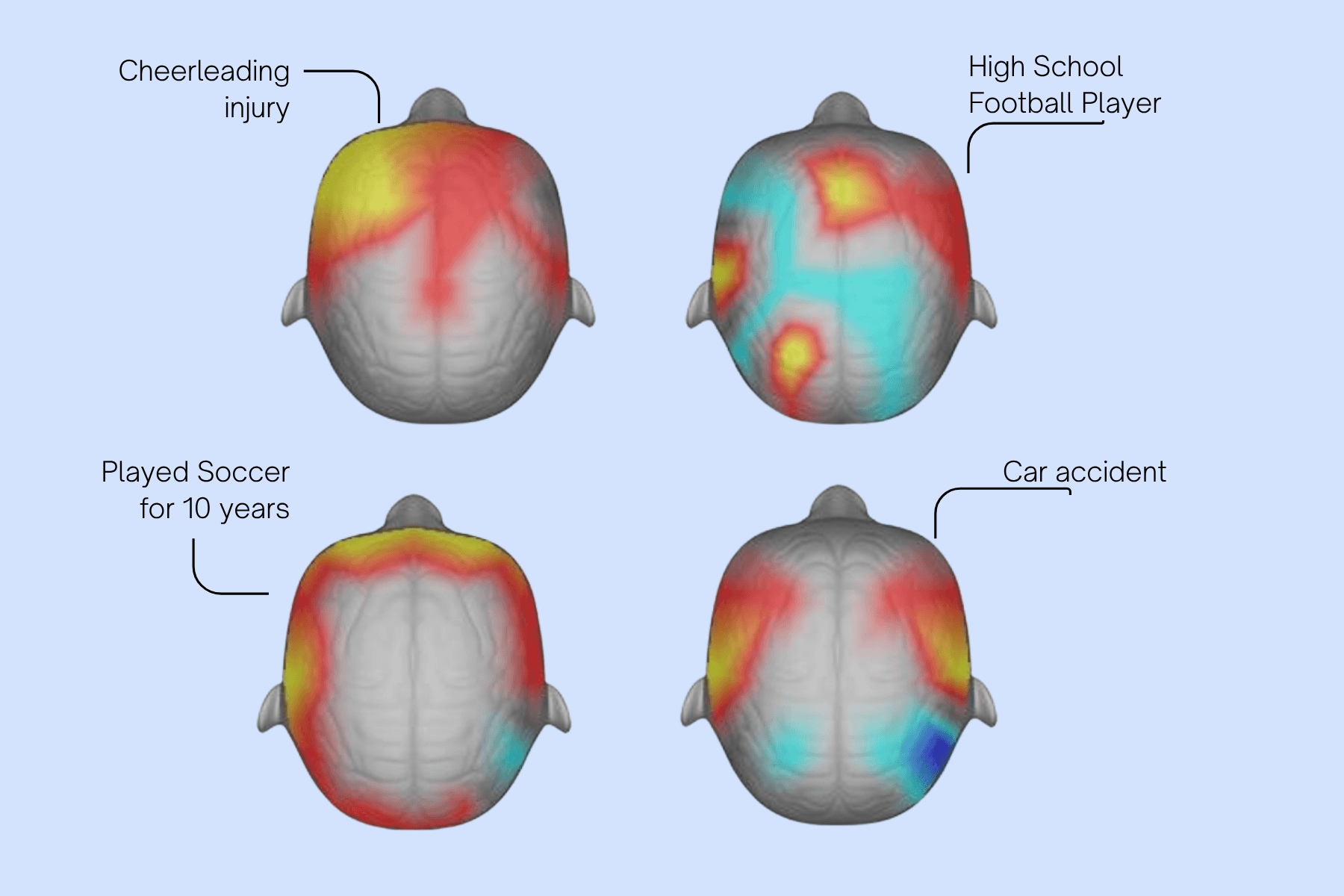
Or maybe there wasn’t one big moment. There were dozens of smaller ones — the heading in soccer, the hits in football, the falls in gymnastics that added up over years. Micro-concussions rarely get diagnosed. But their impact on the brain is real and cumulative.
You’ve followed the protocols. And still something feels off. That’s not in your head — or rather, it is. And a brain map can show you exactly where.
Not a list of symptoms. A picture of what’s happening.
A concussed brain often shows up on a map in very specific ways. Communication between regions breaks down. Certain waves that support clear thinking, emotional regulation, and restful sleep become disrupted. The brain is working harder than it should just to do ordinary things — and that effort is exhausting.
What makes neurofeedback particularly valuable for concussion recovery is that we can actually see where the disruption is happening — and track as it resolves.
Communication between brain regions breaks down after a concussion. Waves that support focus, calm, and sleep become dysregulated — and the brain burns extra energy just to keep up.
A qEEG brain map shows exactly which regions are struggling and how — giving you a real picture of the injury's impact, not just a checklist of symptoms.
As neurofeedback progresses, we remap the brain periodically. The data shows whether patterns are shifting — so recovery is objective, not just based on how you feel.
No exertion. No retelling.
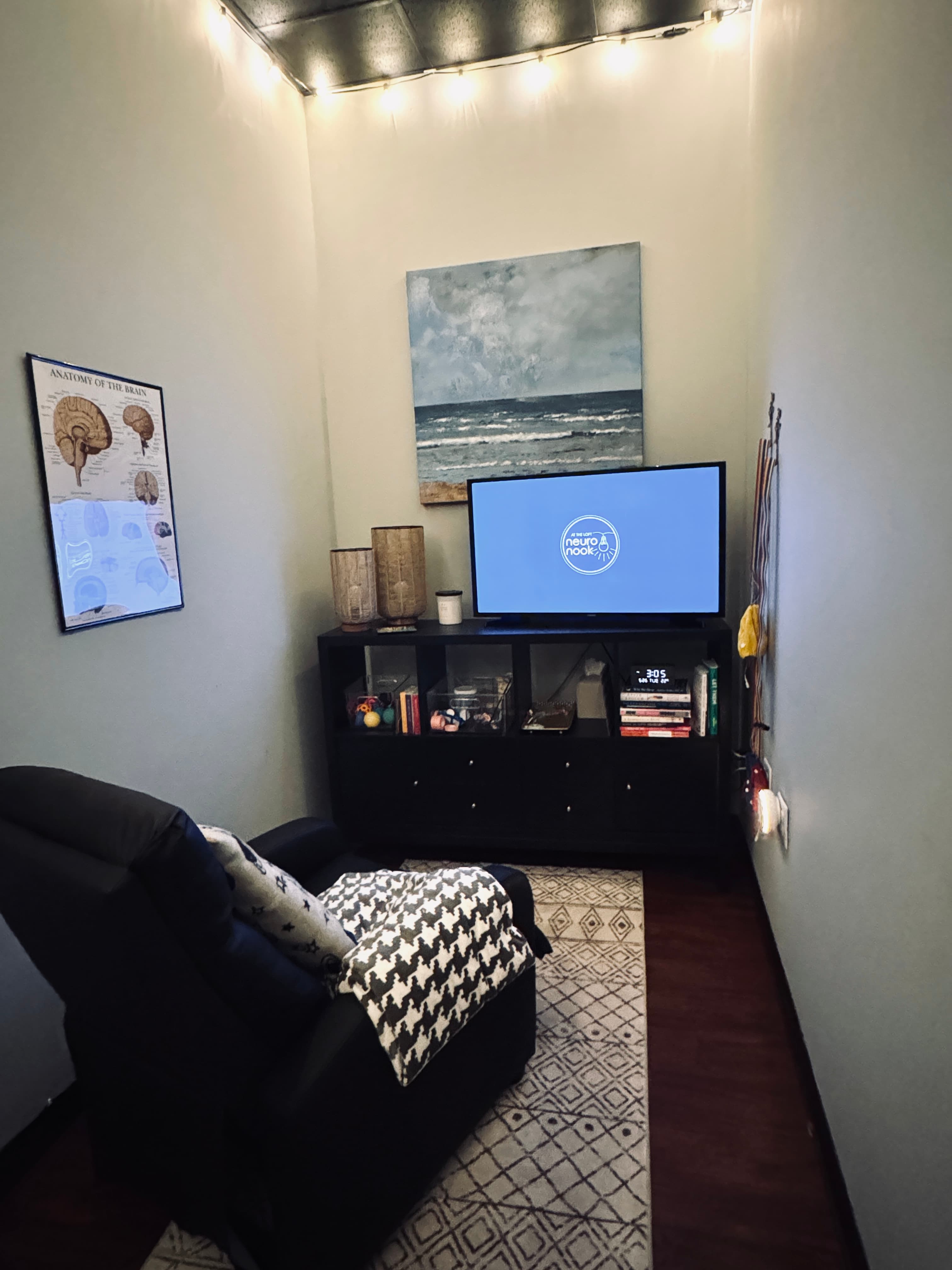
Neurofeedback supports the brain’s natural recovery process by training disrupted patterns back toward healthier function. You sit in a comfortable recliner, watch a show of your choosing, and the software monitors brainwave activity in real time — giving gentle feedback that helps the brain find its way back to more efficient patterns.
Many people who have plateaued in traditional concussion recovery protocols find that neurofeedback moves them forward when nothing else has.
No talking required. No physical exertion. Just the brain doing what it’s designed to do — adapt and recover.
We read brain patterns, not diagnoses.
We don’t diagnose concussions or any other condition at NeuroNook. We read brain patterns and reflect how those patterns may be showing up in daily life. Your medical provider handles diagnosis. We work alongside that process.
Curious if this could help you or someone you love?
Jamie offers a free 15-minute call.
No pressure, no commitment. Just a real conversation about what’s happening and whether neurofeedback might be a fit.