Something happened.
And the brain never fully moved on.
Maybe it was a single event. Maybe it was years of smaller ones that added up. Maybe you can’t even name exactly what it was — you just know that something shifted, and you haven’t felt like yourself since.

You’ve done the work. And the body still responds as if the threat is still here.
The hypervigilance. The intrusive thoughts. The hair-trigger reactions that feel completely out of proportion. The exhaustion of a nervous system that never fully settles.
You’ve talked about it. Maybe for years. And the conversation has helped — but the body and the brain keep responding as if the threat is still present. As if no amount of understanding the past actually changes how it lives in you right now.
That’s not weakness. That’s not a failure of therapy. That’s what trauma does to the brain.
A nervous system stuck in survival mode.
When we map someone carrying the weight of trauma we often see certain brain regions staying overaroused — always scanning, always bracing. Others go quiet in ways that affect memory, emotional processing, and the ability to feel present and safe.
The brain learned to protect you. It just hasn’t gotten the message that it’s allowed to rest.
Seeing that pattern changes everything. For many people it’s the first time the experience has been validated not through words — but through data.
A traumatized brain stays on high alert — scanning for threat, bracing for impact — even in safe situations. The protection response never fully powered down.
A qEEG brain map shows which regions are overaroused and which have gone quiet. For many people it's the first time their experience is reflected back as something real and measurable.
Neurofeedback works with the brain's own plasticity — gently training it away from survival patterns and toward a steadier, safer baseline, without retelling or reliving.
No reliving. No retelling.
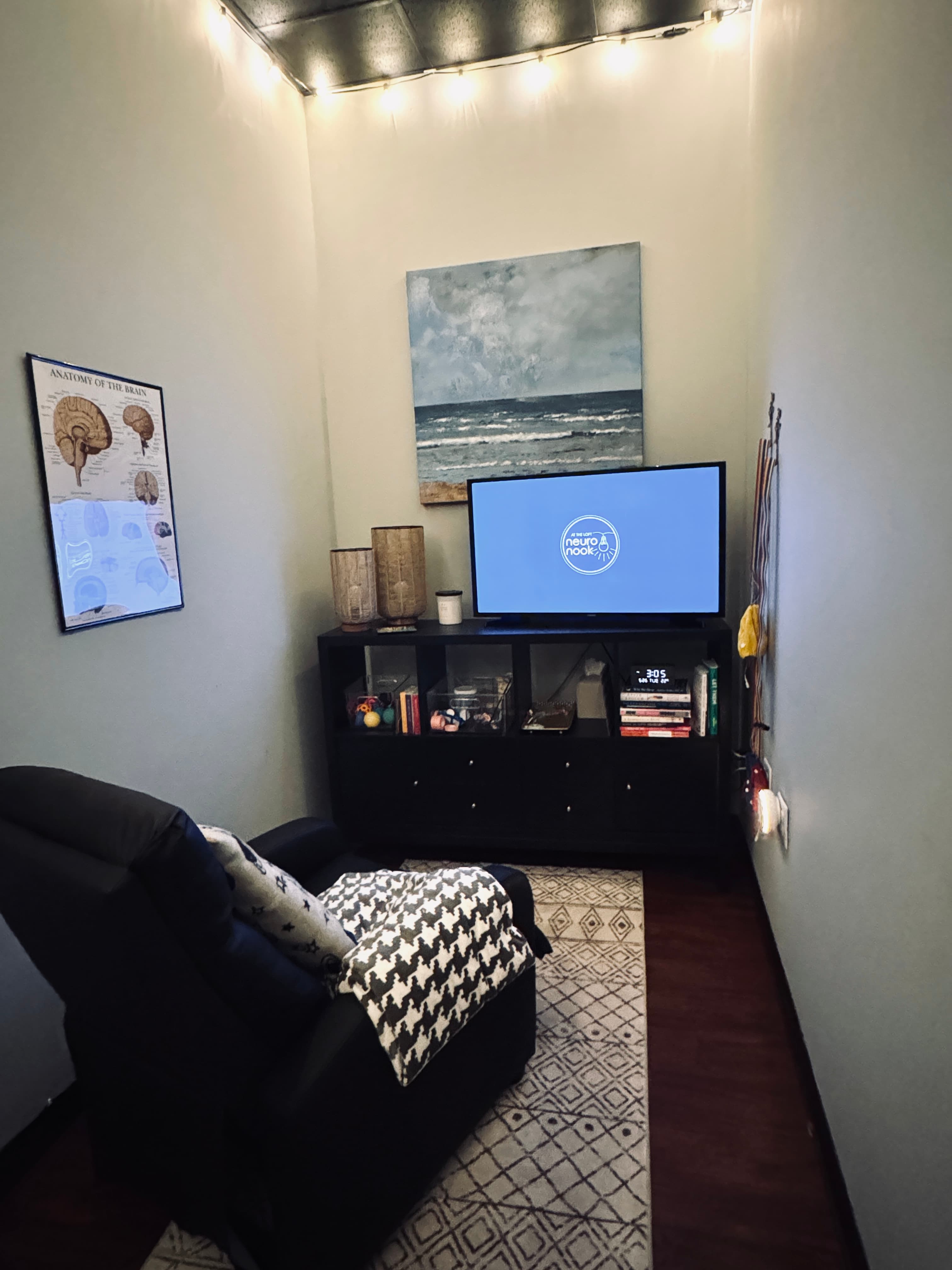
Neurofeedback gently trains the brain toward calmer, more regulated patterns over time. You sit in a comfortable recliner, watch a show of your choosing, and the software gives the brain real-time feedback — guiding it away from survival mode and toward a steadier baseline.
Just the brain practicing something new.
We read brain patterns, not diagnoses.
We don’t diagnose PTSD or any other condition at NeuroNook. We read brain patterns and reflect how those patterns may be showing up in daily life. Your medical provider handles diagnosis. We work alongside that process.
Curious if this could help you or someone you love?
Jamie offers a free 15-minute call.
No pressure, no commitment. Just a real conversation about what’s happening and whether neurofeedback might be a fit.