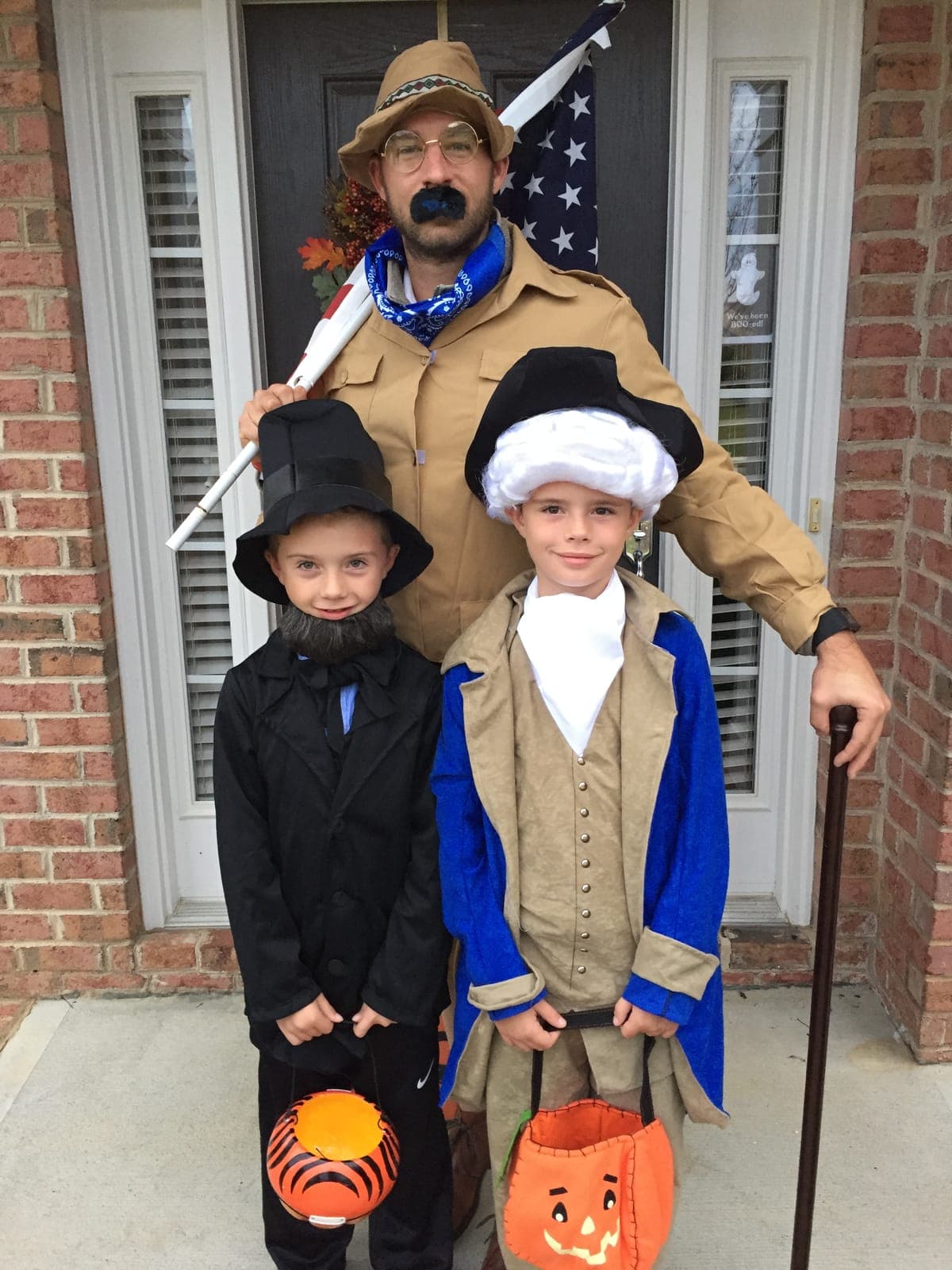
A few Halloweens ago, Mr. Joe showed up on the porch as Teddy Roosevelt, with Abe Lincoln and George Washington standing beside him. He does not do halfway costumes. It is also, we would argue, some of the best brain care any of us do all year.
That sounds like a stretch until you look at what a Halloween night is made of. You are outside. You are moving your body. You are knocking on doors where neighbors see you, and you are laughing with the people you walked there with. That is movement, nature, and community in one evening, three of the five controllables we teach at The Counseling Loft, and nobody has to call it a health habit.
Laughing together changes the brain
A brain imaging study from the University of Turku in Finland and the University of Oxford, published in The Journal of Neuroscience, looked at what happens when people laugh with close friends. Researchers scanned participants’ brains after a session of social laughter and again after a comparable stretch of time alone. Laughing together released endorphins and other opioid peptides in the areas of the brain that handle arousal and emotion. The researchers say this may be one way laughter builds and maintains social bonds.
It fits something most parents already feel: a shared silly moment changes the temperature of a room.
Connected teens struggle less
A 2026 report from the Child Mind Institute surveyed 1,000 U.S. teens ages 14 to 17 about loneliness and connection. Teens who felt more connected, to family, friends, school, and themselves, reported less loneliness and fewer symptoms of anxiety and depression. And 88 percent said in-person time is essential to feeling connected.
Teens are telling us what they need: real time with real people. Halloween hands you an easy, built-in excuse.
For the teen who says they are too old
Here is our vote: go anyway. You do not need a big production.
Lower the bar on the costume. A funny hat counts. A group theme counts. Let your teen veto your idea and pick the family theme instead.
Give them a job. Carry the candy bowl, run the porch, or be the one who decides which houses are worth the walk.
Walk with the group. Their friends, their siblings, the dog. The goal is time together outside, not collecting candy.
Be willing to look ridiculous first. If they see you commit to the silly, they get permission to ease up too. That is why Mr. Joe goes all in.
The night after
Clocks fall back this Sunday, November 1, so Saturday night comes with an extra hour. Treat it as a gift for sleep, not an excuse for a later bedtime. Aim for a normal bedtime by the new clock, keep Sunday morning easy, and get outside for a bit once everyone is up. A late, sugary, laughing night is worth it, and a gentle landing the next day helps everyone feel like themselves again.
Beyond Halloween
The same idea works the other 364 days: movement, nature, and people, in ordinary doses. If you want to see how your family is doing across all five controllables, our free Family Brain Audit walks you through them.
Curious how your family is doing?
Connect with Joe to talk through what you are seeing, or take the Family Brain Audit to see where to start.
Joe Walker, JD, LCMHCA, MA is a therapist and co-owner of The Loft, a therapy and brain-based care practice in Charlotte, NC.
The Loft is a therapy and brain-based care practice in Charlotte, NC. Learn more about NeuroNook.
Neurofeedback is not a substitute for diagnosis or treatment by a licensed medical provider. Results vary.